Explore our History
Lady Chapel
The 16th-century historian John Leland called the Henry VII Lady Chapel ‘the wonder of the world’ and it continues to inspire wonder amongst those who visit it today. It’s a glorious example of late medieval architecture with a spectacular fan-vaulted ceiling.
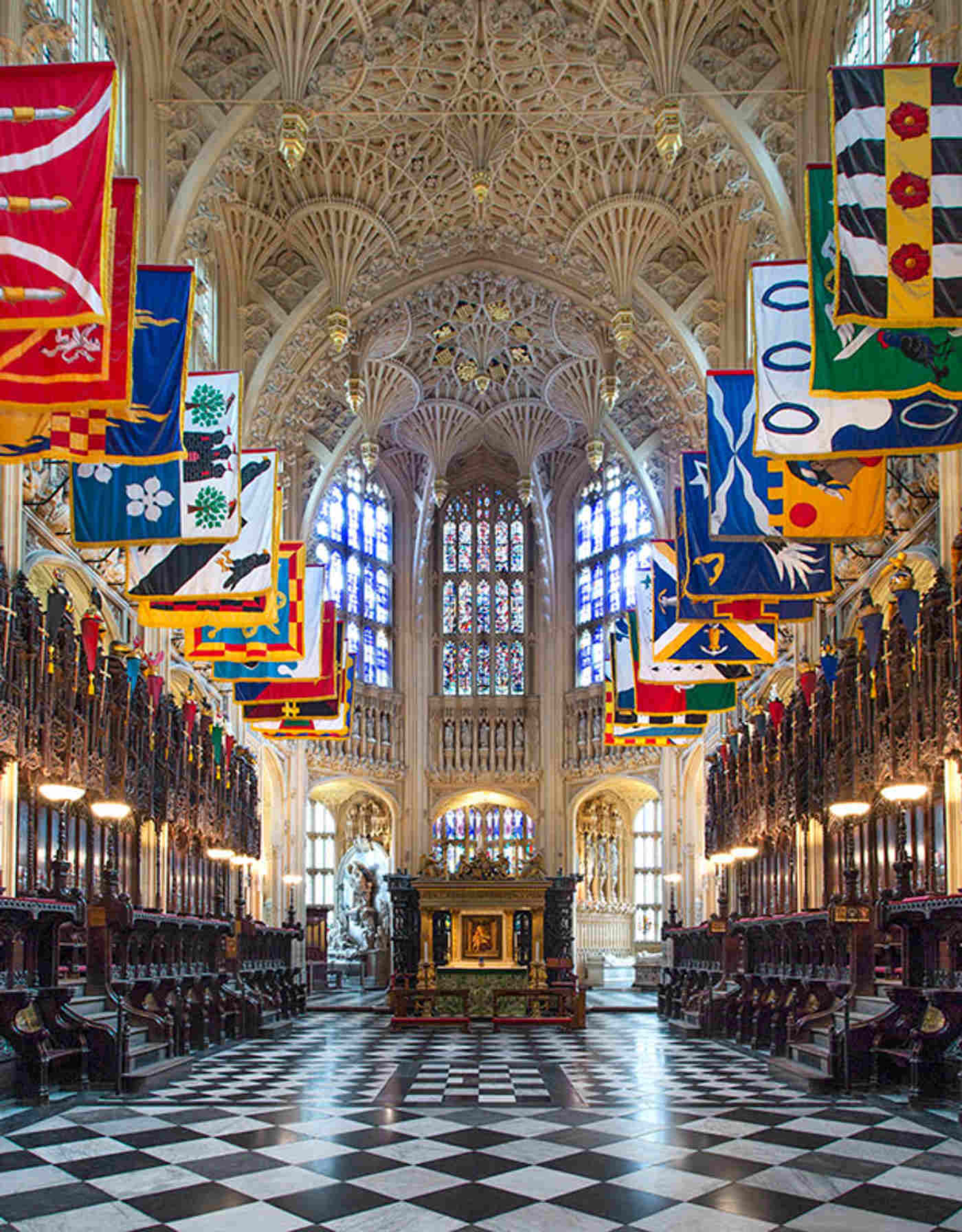
The Lady Chapel
It is the burial place of fifteen kings and queens including Elizabeth I, Mary I, Mary Queen of Scots, and what is thought to be the remains of Edward V, and Richard Duke of York, the "Princes in the Tower". Below the central aisle is the Hanoverian vault where George II his Queen, Caroline, and members of their family are buried. The Stuart vault is in the south aisle where Charles II, William III and Mary II, and Queen Anne lie buried. Edward VI is buried in a small vault in front of the altar. Anne of Denmark, queen of James I, lies in one of the apsidal chapels.
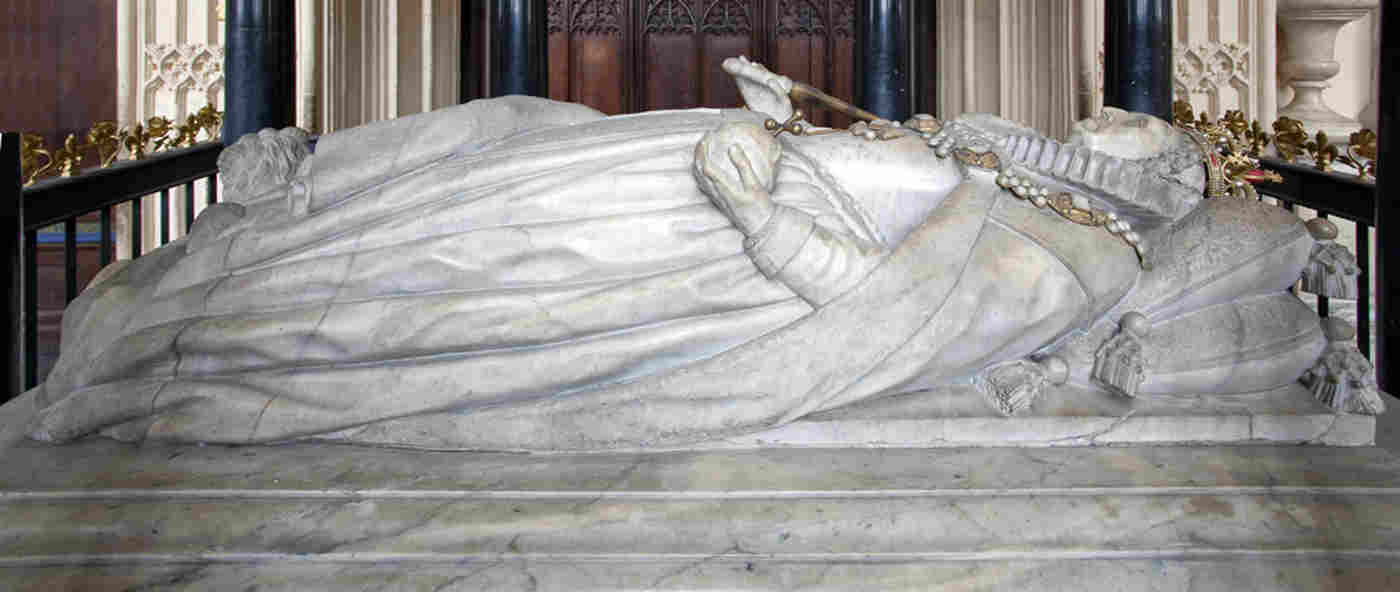
Tomb of Elizabeth I
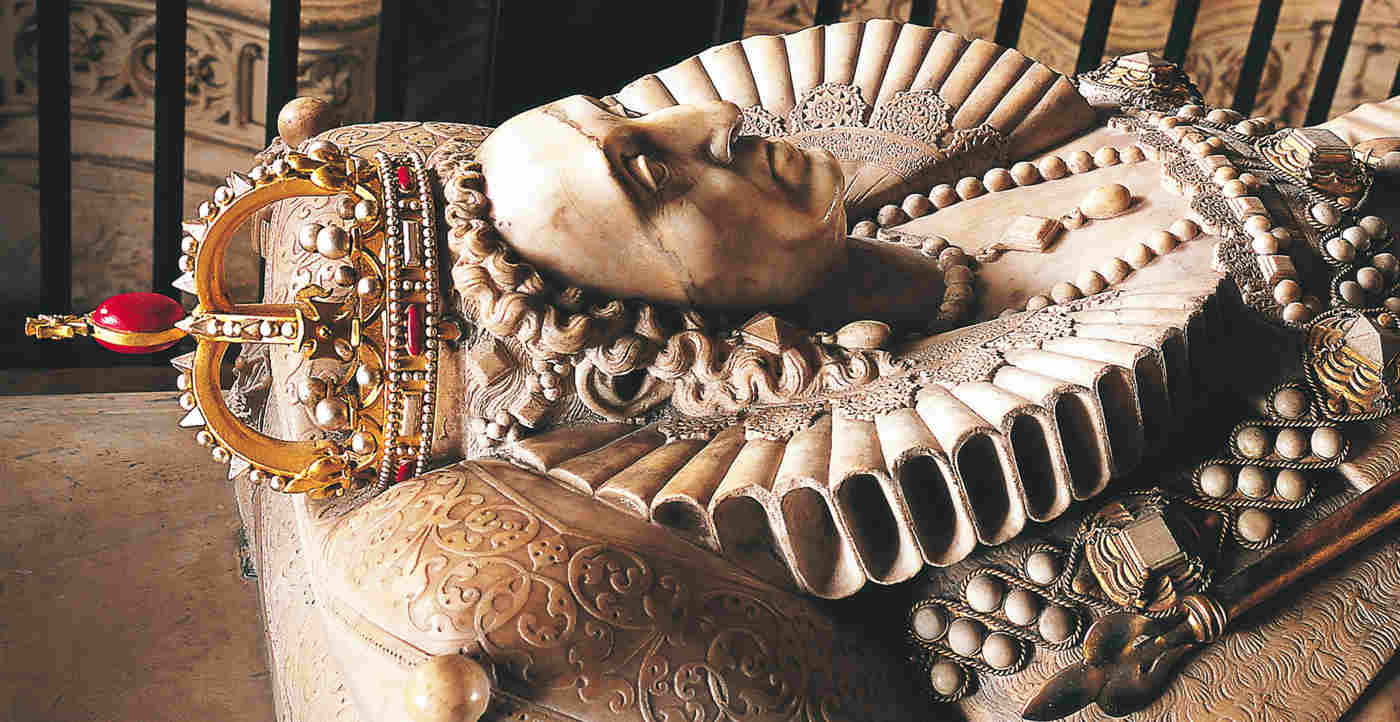
Effigy of Elizabeth I
Henry VII lavished huge sums on his new Lady Chapel, which was begun in 1503 but not completed until 1516, nearly six years after his death. The accounts for building the chapel do not survive. It is thought the architects were Robert Janyns and William Vertue.
The fine gates at the entrance are made of bronze on a wooden framework and were possibly designed by Thomas Ducheman. They depict various badges used by the Tudors, including the portcullis, falcon and fetterlock, and Tudor rose.
Henry’s imposing tomb at the east end of the chapel has magnificent gilt bronze effigies of the king and his wife, Elizabeth of York, made by the brilliant Florentine Renaissance sculptor, Pietro Torrigiano. The king and queen lie buried in a vault below their monument, together with James I. The bronze tomb screen is by Thomas Ducheman. Henry's mother Lady Margaret Beaufort also has a tomb designed by Torrigiano in the south aisle.
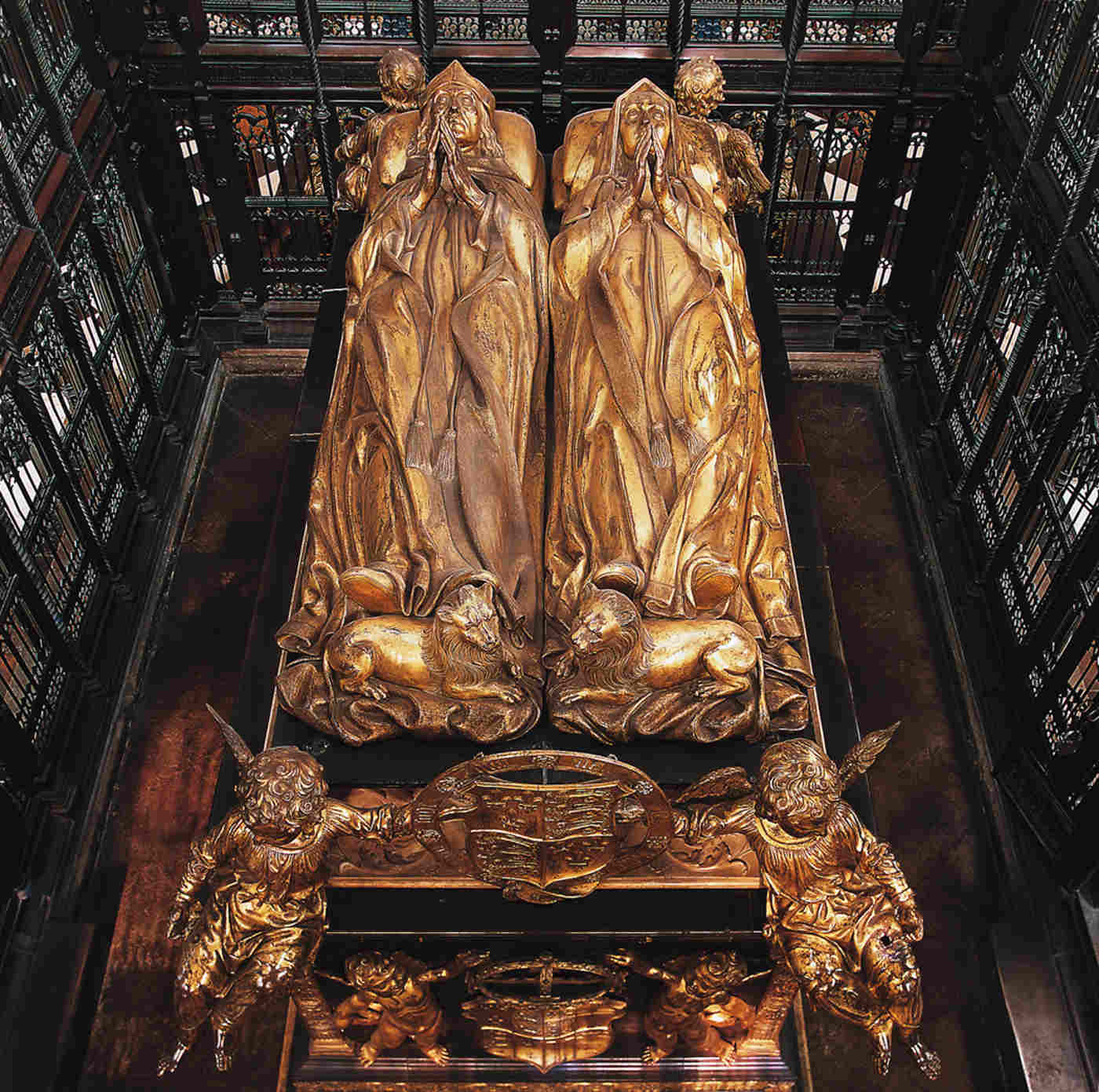
Tomb effigies of Henry VII and Elizabeth of York
Since 1725, the chapel has been used for installations of Knights of the Order of the Bath, and the colourful banners of living knights hang here. Brass plates with coats of arms of current and former knights are attached to the stalls. The Sovereign and the Great Master of the Order continue to install new knights in the chapel.
A Lady Chapel is a chapel dedicated to the Blessed Virgin Mary and is common to most cathedrals and large churches. The present altar was erected in 1935 and the Bartolomeo Vivarini picture was presented at this time.
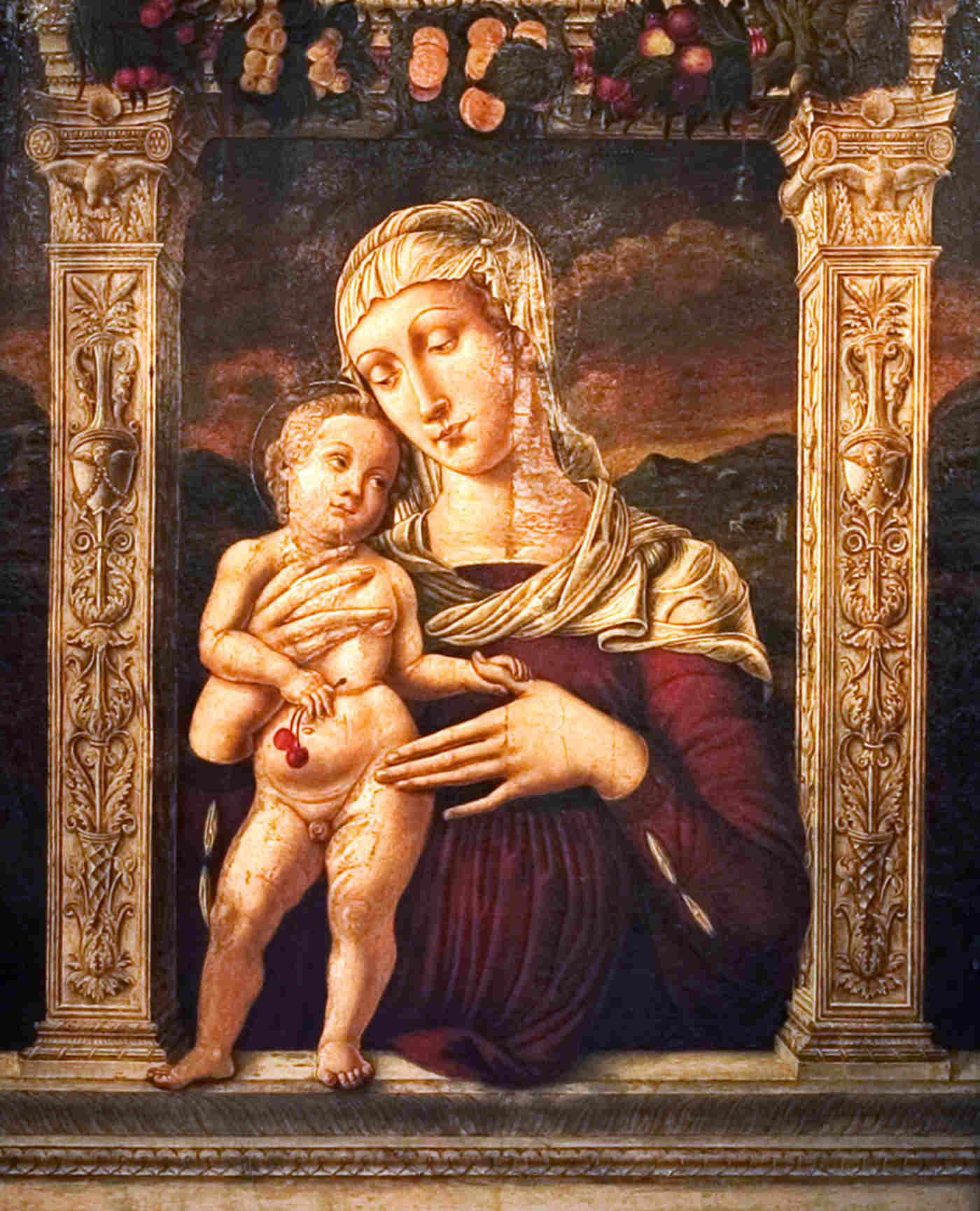
Blessed Virgin Mary by Vivarini on the altar
The outstanding feature of the chapel is the spectacular fan-vaulted roof with its carved pendants.
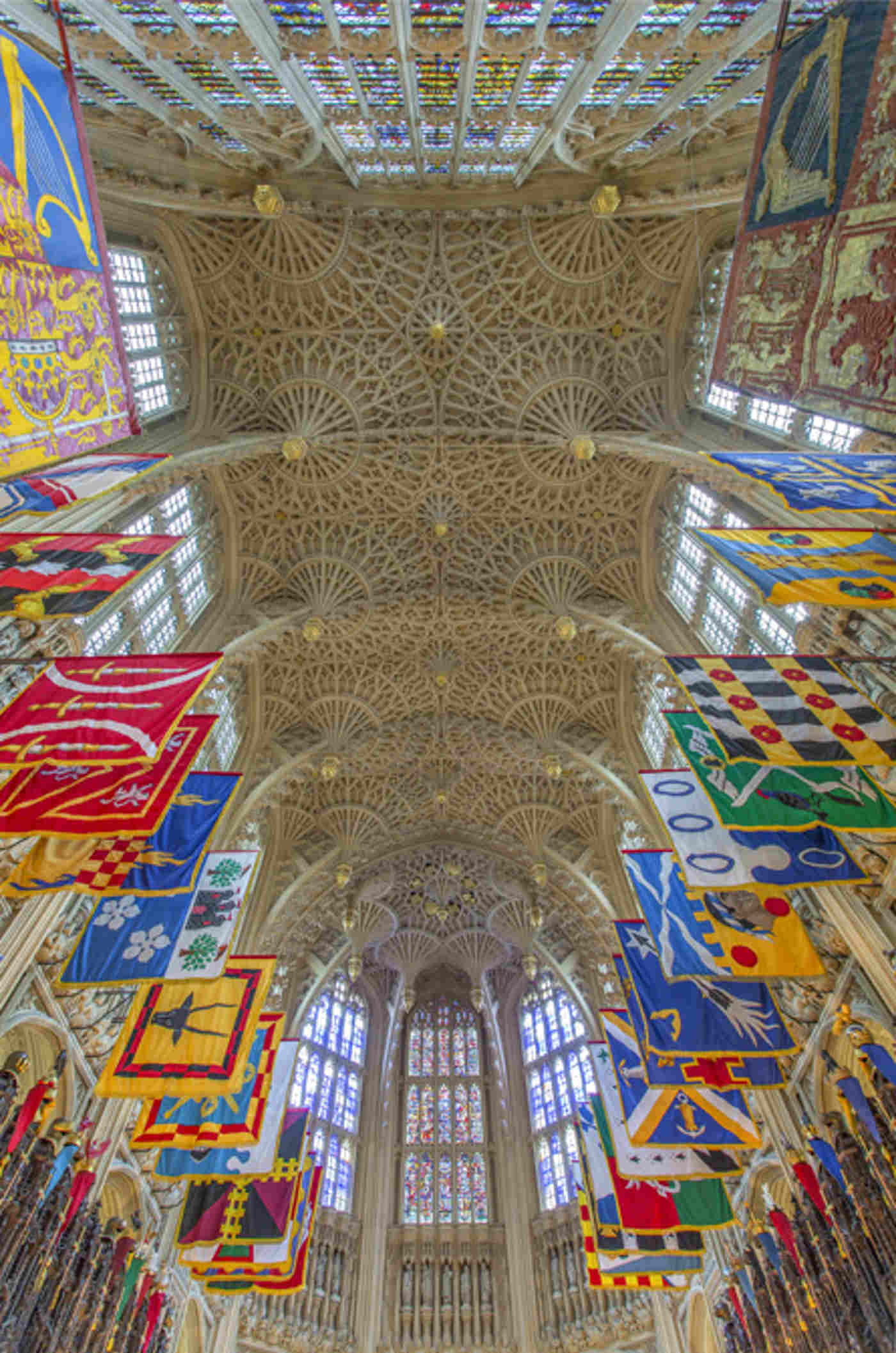
Henry VII chapel vaulting
Around the walls remain 95 statues of saints (PDF). One of these depicts the bearded lady St Wilgefort (also called Uncumber). Two depict St Matthew wearing spectacles.
Beneath the hinged seats of the wooden stalls are beautifully carved misericords. The seats were hinged in order to provide support to the monks and the choir who had to stand during long services.
The original stained glass by Bernard Flower was destroyed in the time of Cromwell and the few remnants of it were mostly blown out by blast during the bombing in the Second World War. Only a few quarries (small diamond shaped panes) remain, which are now set in the side aisle.
At the east end is the Royal Air Force chapel dedicated in 1947. The stained glass window by Hugh Easton depicts the badges of the fighter squadrons that took part in the Battle of Britain in 1940. Above, in the main east window, is stained glass designed by Alan Younger, installed in 2000. In May 2013 two new windows designed by Hughie O'Donoghue were installed either side of the central east window. Predominantly blue in colour they incorporate emblems related to the Blessed Virgin Mary including lilies and stars. All three eastern windows were presented by Lord and Lady Harris of Peckham.
The west window is filled with stained glass designed by John Lawson, with coats of arms or initials of many people who contributed to the restoration of the chapel, completed in 1995. It particularly honours Sir John Templeton, a major benefactor. Smaller stained glass windows for other donors are in the side chapels.
Further reading
Henry VII's Lady Chapel by James Wilkinson
Westminster Abbey: the Lady Chapel of Henry VII edited by T. Tatton-Brown and R. Mortimer, 2003